Building Effective Learning Environments in Soccer
How Coaches Can Create Transformational Cultures That Accelerate Player Growth

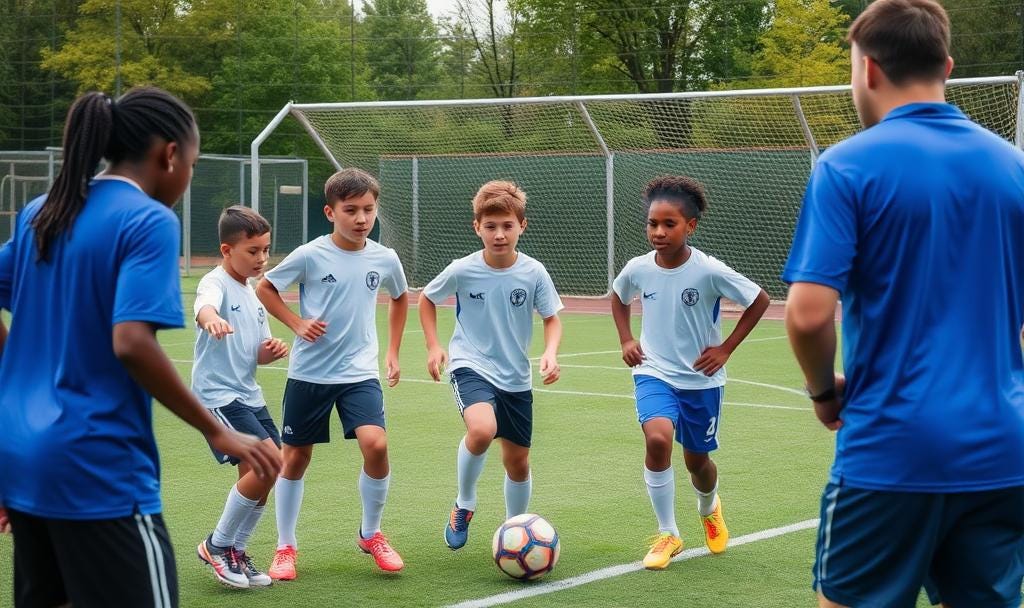
In modern soccer, the best coaches are not just tacticians or trainers; they are architects of learning environments. The most successful programs and academies are those where learning is not an event but a culture, embedded into every session, every conversation, and every experience. This newsletter explores how coaches can build effective learning environments that foster transformational change and accelerate player development.
Part 1: Understanding the Learning Environment in Soccer
What Is a Learning Environment?
A learning environment encompasses the physical, emotional, cognitive, and social conditions in which learning takes place. In soccer, this is more than just a field and cones; it’s the environment created by the coach’s philosophy, methods, language, expectations, and leadership.
Characteristics of Effective Learning Environments
Psychological safety
Players feel free to express themselves without fear of ridicule or harsh judgment.
Clear expectations and standards
Everyone knows what is expected in terms of effort, behavior, and growth.
Purposeful practice
Training sessions are designed with specific learning outcomes, not just physical exertion.
Feedback-rich culture
Mistakes are treated as learning opportunities, not failures.
Player-centered approach
Development is tailored to the individual while considering team needs.

Part 2: Common Barriers to Player Learning
Before building a more effective learning environment, it’s important to recognize what often gets in the way of learning in soccer.
Barrier 1: Overcoaching and Micro-Managing
Coaches who talk too much, stop the play excessively, or dictate every move deny players the chance to think and solve problems on their own.
Barrier 2: Fear-Based Culture
When players fear making mistakes, they play safe, and safe play stifles creativity and growth.
Barrier 3: Lack of Intentional Design
Without deliberate structure, sessions default to generic drills that don’t align with game scenarios or player needs.
Barrier 4: Win-at-All-Costs Mentality
When short-term results outweigh long-term development, the environment becomes performance-driven instead of learning-driven.

Part 3: Building Blocks of a Transformational Learning Culture
Let’s explore the foundational principles coaches can adopt to create transformational learning environments.
1. Establish Core Values and Beliefs
Your coaching philosophy sets the tone. Are you about growth over perfection? Effort over talent? Collaboration over individualism?
Example: At Brentford FC, coaches instill a “fail forward” culture; mistakes are expected and embraced as essential to improvement.
ACTION TIP:
Collaborate with your players to define 3–5 core team values. Display them visibly and refer to them consistently.
2. Design Training Around Game Reality
Design sessions that replicate the demands of the game, with constraints and scenarios that force decision-making.
Use small-sided games, position-specific training, and varied opposition behaviors.
Adjust pitch dimensions to simulate pressure and tempo.
COACHING CUE:
“Don’t coach the drill. Coach the decision.”
3. Foster Ownership and Autonomy
Let players take charge of their learning. Involve them in goal setting, reflection, and even parts of training design.
Empower captains to lead warmups or tactical discussions.
Use guided discovery: Ask questions rather than giving answers.
EXAMPLE QUESTION:
“What did you see that made you make that pass?”
4. Use Mistakes as Learning Gold
Shift the perception of errors. Frame them as information that helps us learn, not as problems to avoid.
Tool:
Post-session “Mistake of the Day” board where players anonymously submit a mistake and what they learned from it.
5. Create Psychological Safety
A psychologically safe environment allows players to be themselves, speak up, and take risks without fear.
Strategies:
Model vulnerability; admit your coaching errors.
Celebrate effort as much as outcomes.
Address negativity immediately.
“You can’t grow if you’re constantly guarding yourself.”
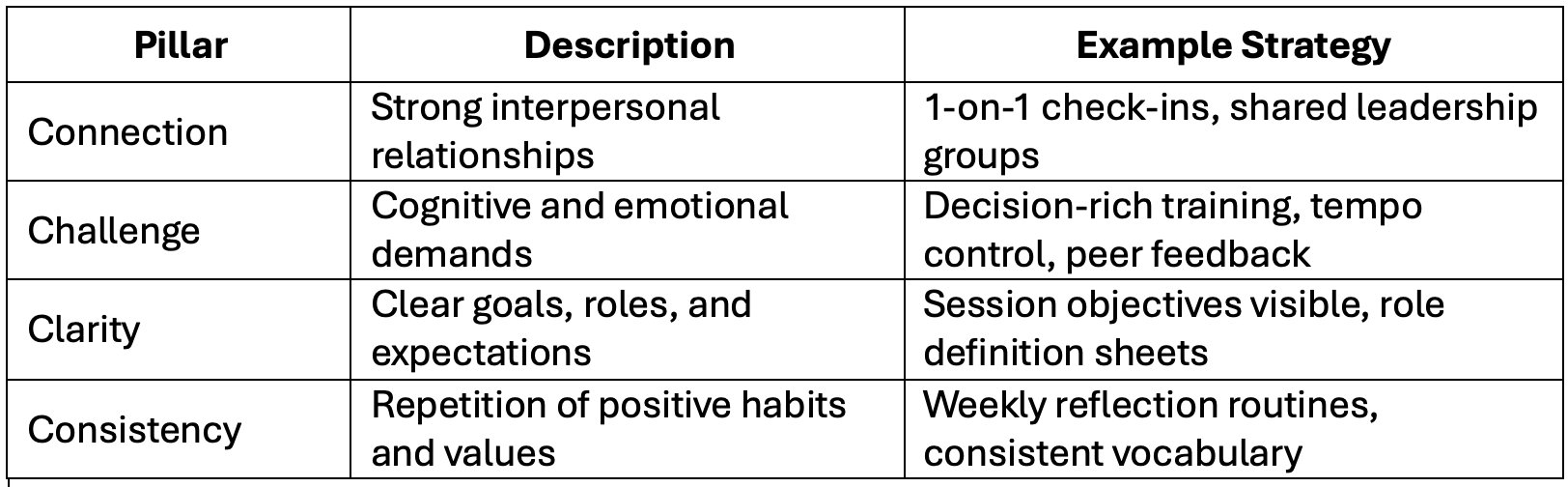
Part 5: Practical Strategies to Implement
Strategy 1: The 70-20-10 Rule of Learning
70% from playing and practicing (on-field experience)
20% from interaction (peer and coach feedback)
10% from instruction (video, tactical boards, reading)
Takeaway: Reduce lecture time. Increase game-relevant play and social learning moments.
Strategy 2: The Session Sandwich
Structure every session like this:
Start with exploration (free play or scenario)
Zoom in with teaching (drill or small-sided game)
Finish with expression (match-like conditions or conditioned game)
Goal: Give players the space to test and re-test ideas under varying degrees of support.
Strategy 3: Create Feedback Loops
Use player journals to log key learnings and session feedback.
Hold weekly feedback circles with open sharing.
Provide video clips with questions, not just instructions.
“What could you have done differently in this clip?”
Part 6: Coach Behaviors That Build Learning Cultures
Great environments are driven by intentional coaching behaviors.
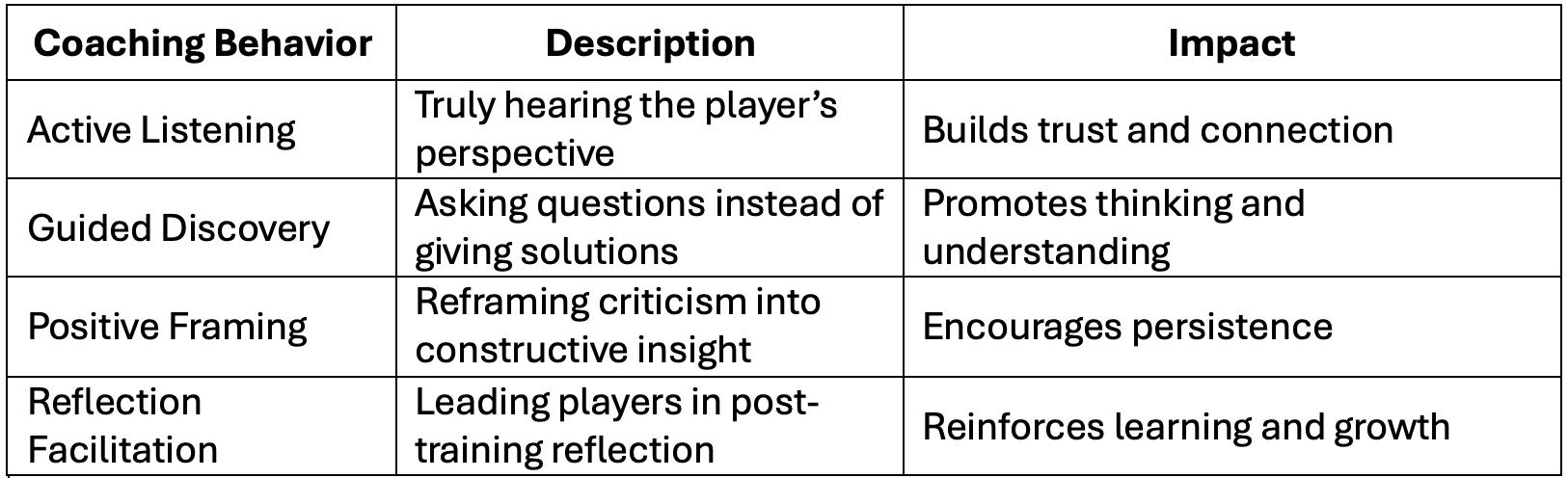
Coach Reflection Prompt:
“Am I developing players who think, or just players who follow directions?”
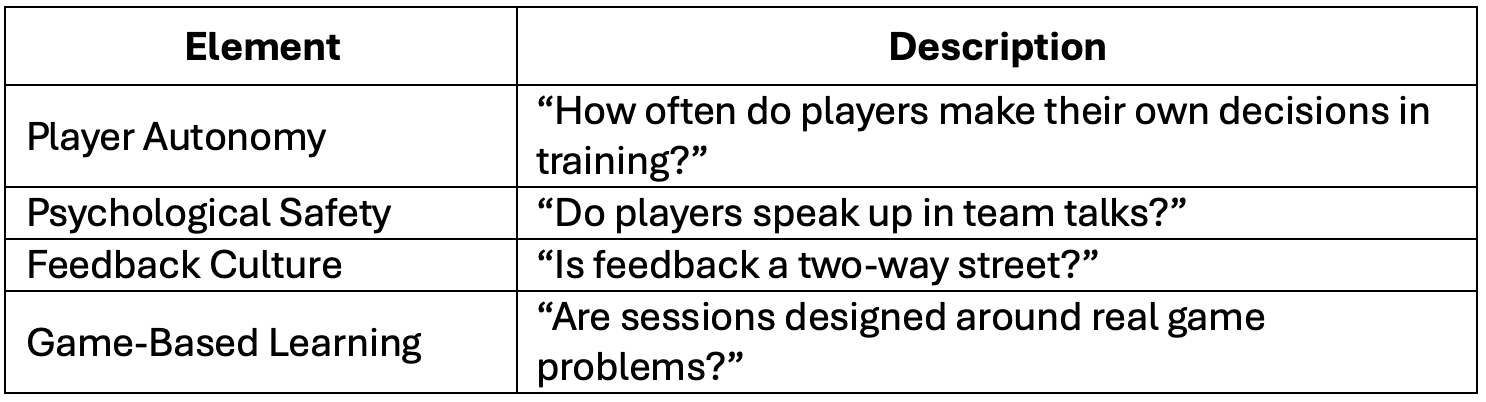
Use this evaluation quarterly to identify areas for improvement and align staff approaches.
Part 8: Case Study – Creating a Transformational Culture
The “Ubuntu” Model – South Africa U17s
South Africa’s youth national team adopted the Ubuntu philosophy: “I am because we are.” Coaches built their environment around mutual respect, shared learning, and deep reflection.
Key Features:
Players led daily mindfulness sessions.
Each player mentored another teammate.
Coaches rotated feedback roles during sessions.
Outcome: Players became more resilient, thoughtful, and communicative. The team saw a marked improvement in individual and collective performance, despite limited resources.
To help you begin building your own transformational learning culture, download the free “Learning Environment Builder Toolkit.”

Final Thoughts
The environments we create as coaches define not just how players train, but how they grow. By deliberately fostering a transformational culture that prioritizes trust, exploration, challenge, and reflection, we accelerate learning in a way that endures far beyond the pitch.
Every player who feels safe to take risks, who is challenged to think and solve, who is treated as a person first and athlete second, that player is more likely to reach their potential.
Remember:
You’re not just coaching soccer. You’re coaching learners. Leaders. People.
Let’s build the environments they need to thrive.
“Culture eats tactics for breakfast. Build the right environment, and the right football will follow.”– Anonymous Coach Educator
Thank you for reading Game Changer. Elevate your coaching with our eBooks full of innovative strategies and practical tips. Click below to explore more and start your journey to smarter coaching!