

Developing a Coaching Methodology That Aligns with High-Performance Demands

Welcome to the second edition of our 9-part Coaching Development Series!
In the first newsletter, we explored how to build a coaching philosophy by defining core values, principles, and your preferred style of play. Now, we take the next step: translating your philosophy into a cohesive coaching methodology that drives performance and maximizes player development.
Your coaching philosophy tells you what you believe and why it matters. Your methodology answers how to implement those beliefs systematically, ensuring your team consistently develops the skills, behaviors, and tactical intelligence required for high performance.
This edition will guide you through the difference between philosophy and methodology, the importance of structuring your training micro-cycles, aligning sessions with tactical goals, and a practical framework to bring it all together.
1. Philosophy vs. Methodology: Clarifying the Difference
Many coaches struggle to distinguish between philosophy and methodology. Understanding the distinction is crucial:
Coaching Philosophy – The foundation of your identity. It defines your values, beliefs, and overarching principles. Example: “I value creativity and player decision-making in possession.”
Coaching Methodology – The practical roadmap for implementing your philosophy. It focuses on how, what, and when you deliver training to achieve your tactical, technical, and physical objectives. Example: “I design 4x4 small-sided games on Monday to develop creativity under pressure, with specific constraints to encourage quick passing and positional rotation.”
Think of philosophy as the compass and methodology as the navigation system. Without philosophy, your methodology lacks direction; without methodology, your philosophy remains theoretical and disconnected from results.

Coaching Reflection Question:
How do you currently differentiate between your coaching philosophy and the methodology you use in sessions?
2. Why a Structured Methodology Matters in High-Performance Soccer
High-performance soccer demands consistency, progression, and specificity. A structured methodology allows you to:
Align Training with Tactical Goals – Every session, drill, and activity is designed to reinforce tactical principles.
Ensure Player Development – Structured methodology balances technical, tactical, physical, and psychological development.
Optimize Load and Recovery – Microcycles and session sequencing prevent fatigue while maximizing adaptation.
Promote Continuity Across the Season – Players experience a coherent approach that builds week by week, reinforcing learning and behavior patterns.
Without a defined methodology, training risks becoming reactive, inconsistent, or overly focused on short-term outcomes.
3. Structuring the Weekly Microcycle
The microcycle is the building block of your coaching methodology. It represents a weekly training plan, where each session contributes to tactical objectives, physical preparation, and overall team development.
Key Considerations:
Session Purpose: Define the specific tactical or technical objective for each session. Example: Developing the team’s high-press strategy on Wednesday.
Training Load: Balance intensity, duration, and recovery. Early in the week might focus on high-intensity drills, while pre-match sessions prioritize tactical rehearsals and recovery.
Progression: Start with simple concepts, increasing complexity and decision-making as players assimilate principles.
Example Microcycle (4-day week for competitive teams)
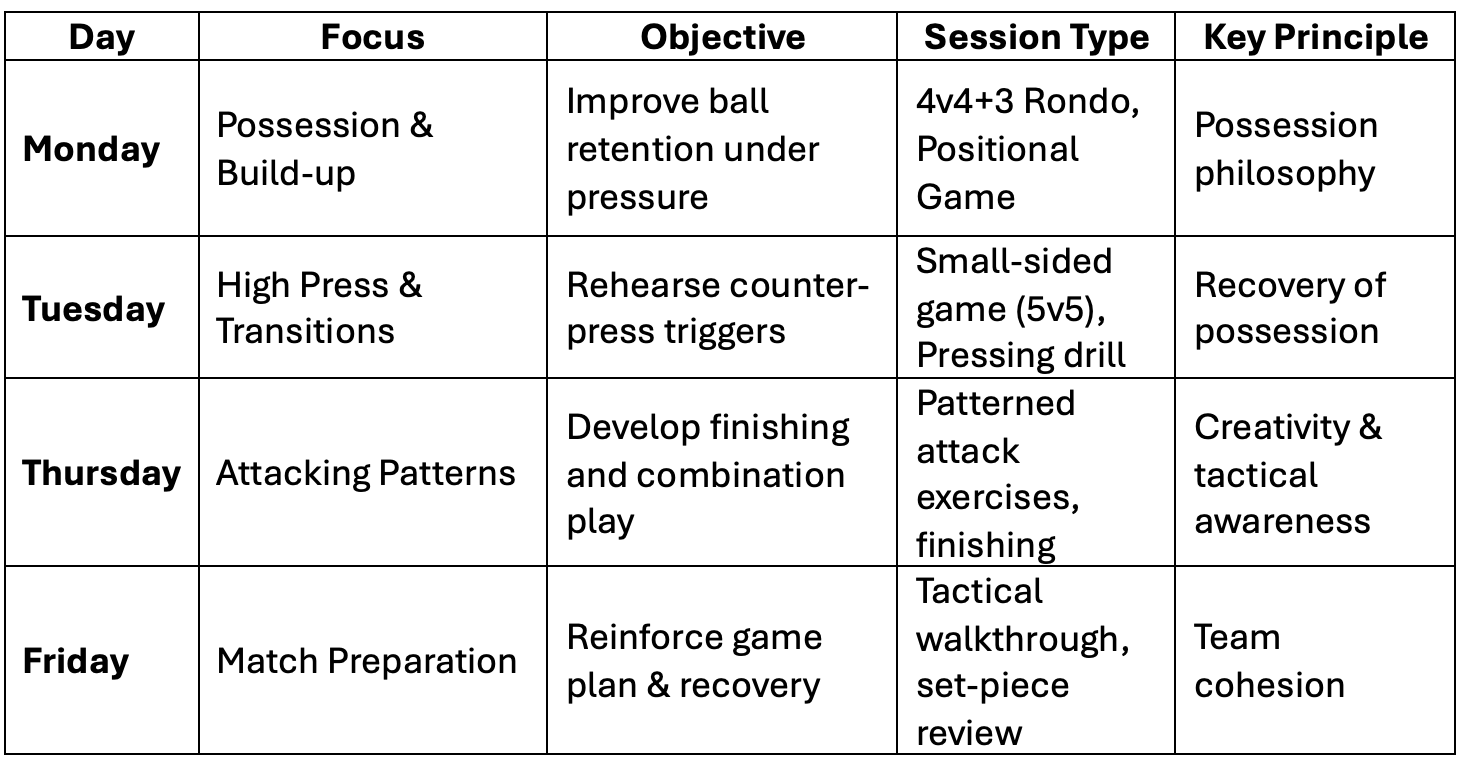
This microcycle demonstrates methodology in action: every session is purpose-driven, aligned with tactical priorities, and sequenced for optimal learning and performance.
Coaching Reflection Question:
How does your weekly training reflect your coaching philosophy and tactical priorities?
4. Aligning Training with Tactical Goals
Your methodology should ensure every drill, game, and exercise is representative of the real match environment, emphasizing tactical understanding alongside technical execution.
Key Steps to Alignment
Identify Tactical Goals: Based on your philosophy, define key team behaviors. Example: “Maintain possession in wide areas while pressing high defensively.”
Translate Goals into Session Objectives: Break down goals into actionable training outcomes. Example: Small-sided games emphasizing wing rotations and defensive pressing triggers.
Select Representative Drills: Choose exercises that mirror match constraints;
